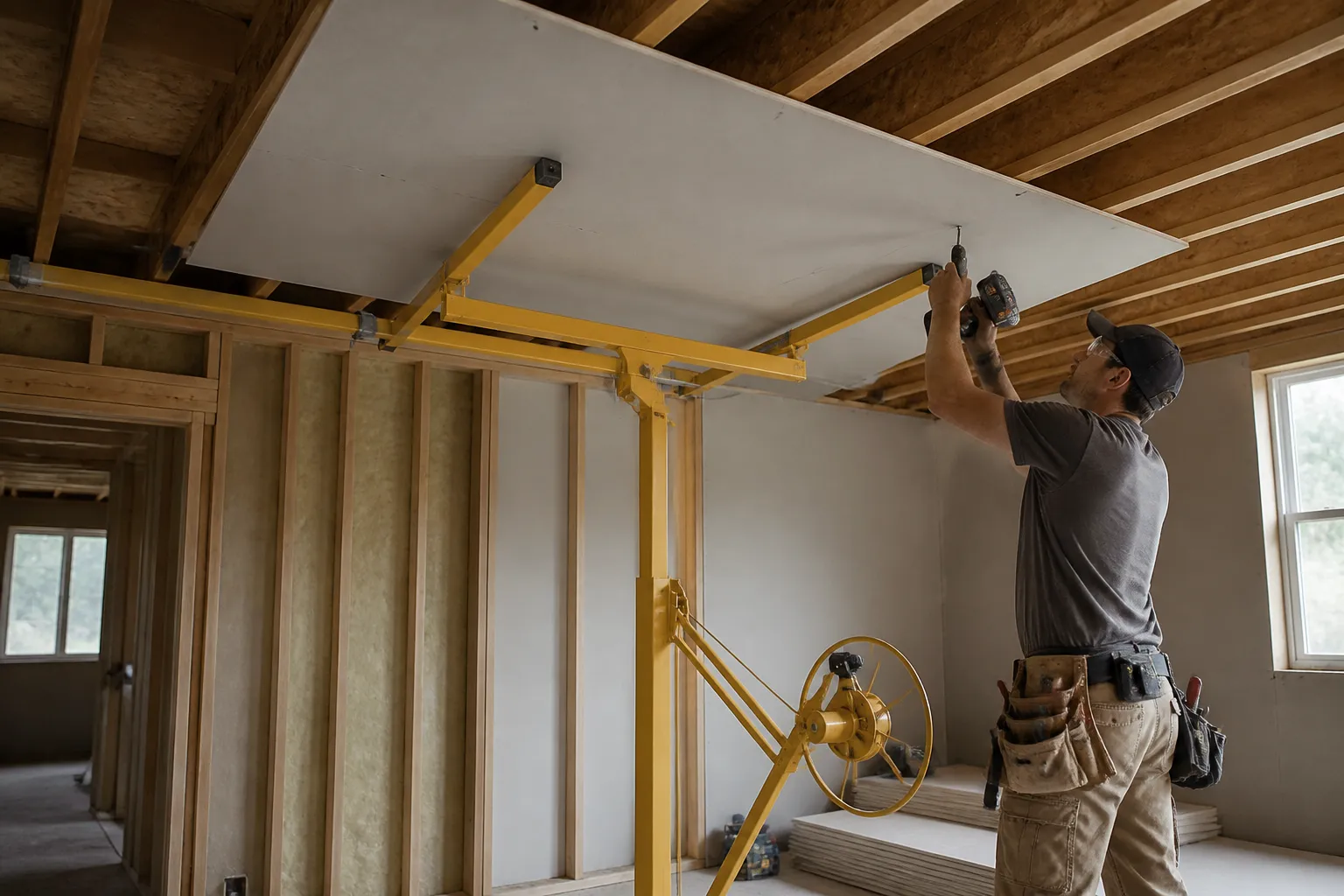
A ceiling crack that keeps growing, a brown stain that returns after every patch, or a section that feels soft under pressure are signs that the problem needs more than a quick cover-up. When the surface shifts, stains through paint, or starts to bow, the repair has to address the damage below the finish so the ceiling can hold up and look smooth again.
Windsor Drywall Company handles Ceiling Repair for homeowners and property managers across LaSalle, ON, with careful patching, tape work, mud application, sanding, and texture matching when needed. If your ceiling has water marks, plaster damage, nail pops, or cracked joints, we restore the surface so it is ready for primer and paint without obvious patch lines or uneven texture.
Ceiling problems often start small, then become easier to spot once the finish begins to move. Some issues are cosmetic, while others point to damage behind the surface that needs attention before new finish work goes on.
For Ceiling Repair Windsor homeowners often want one thing first: a ceiling that looks like the damage was never there. That starts with identifying whether the problem is at a seam, around a fixture opening, or across a wider area that needs replacement.
Ceiling damage can come from age, movement, past repairs, or moisture exposure. A good repair begins with figuring out why the surface failed, because a patch over an active issue rarely stays invisible for long.
When the source is moisture-related, we look beyond the stain itself. If the ceiling board is deteriorated, soft, or distorted, the repair may need replacement before finishing can begin. That extra step is what keeps the final surface flatter and more stable.
Ceiling repair should do more than hide a flaw. It needs to rebuild the surface so it can be sanded, primed, and painted without telegraphing the patch. We work carefully, especially on visible ceilings where light makes every seam and ridge easier to notice.
We inspect the damaged section, check for loose material, and look at the surrounding finish. If the ceiling has a stain, crack, or sagging area, we determine whether patching, board replacement, or resurfacing will create the cleanest result.
Damaged drywall, loose texture, and failing tape are removed as needed. From there, we install new material or reinforce the existing surface, then apply tape and compound in controlled coats so the repair blends into the surrounding ceiling.
Once the patch is set, we sand the area for a smooth transition and match the existing ceiling texture as closely as possible. That step matters on homes with textured finishes, since an uneven repair stands out as much as the original damage.
Different ceiling problems call for different approaches. A small crack near a seam does not need the same process as a water-damaged section or a broad area with lifting texture. Choosing the right method keeps the finish cleaner and avoids unnecessary disturbance to the rest of the ceiling.
Windsor Drywall Company also handles related work such as Drywall Repair Windsor projects, Drywall Finishing Windsor jobs, and Plaster Repair Windsor services, which is useful when the ceiling issue extends beyond a simple touch-up.
Ceilings are one of the most visible surfaces inside a home, and they reveal defects quickly. Even a small ridge can catch light from windows or fixtures, which is why ceiling work needs more than speed. It needs a flat, consistent finish that holds up once paint goes on.
In LaSalle, ON, many ceiling repairs involve seams, corner cracks, or areas around past patches. The key is reducing the chance that the repair will show through after painting. That means using the right compound buildup, giving each coat time to set, and sanding with care so the transition between old and new material is subtle.
For homeowners comparing Ceiling Repair Windsor options, it helps to understand that a ceiling patch is only as good as the finishing around it. Tape placement, mud thickness, feathering, and final texture all affect how the repair disappears under paint.
Many ceiling repairs look acceptable before primer, then reveal flaws once light hits the surface from a different angle. That is why we pay attention to the finish stage and not just the patch itself. A smooth ceiling should look even from the doorway, from the far corner, and from below a fixture.
Before a ceiling is painted, we look for:
If you are planning paint after ceiling work, our process helps reduce the risk of a patch that flashes through the final coat or leaves a visible outline after drying.
We provide Ceiling Repair for homes and properties across LaSalle, ON, along with nearby communities throughout Essex County, including Windsor, Tecumseh, Amherstburg, Essex, Kingsville, Leamington, Belle River, Lakeshore, Harrow, Maidstone, and Elmstead. Many of our ceiling projects begin as small repairs and grow into broader interior work once the homeowner sees how much a smooth finish changes the room.
Windsor Drywall Company also supports related needs such as Drywall Installation Windsor, Drywall Repair Windsor, Taping and Mudding Windsor, Basement Drywall Windsor, Commercial Drywall Windsor, and Popcorn Ceiling Removal Windsor when a ceiling repair is part of a larger renovation or restoration plan.
Yes, many cracks can be repaired without full replacement. The key is determining whether the crack is isolated or tied to broader movement, failed tape, or damaged board.
A dry stain can still leave behind weakened material or discoloration that shows through paint. We inspect the area and decide whether the affected section needs replacement or sealing before finishing.
Texture matching is part of many ceiling repairs. We aim to blend the repaired section so it sits naturally beside the existing finish rather than looking patched.
Not always. Small holes, dents, or fixture openings can often be patched cleanly. Larger damage or soft surrounding material may need a larger repair area.
Not exactly. Plaster repair calls for different handling because the material behaves differently from drywall. The repair method depends on the extent of cracking, separation, or missing sections.
If the ceiling is sagging, soft, stained, or breaking apart around the damaged spot, we look for the cause before finishing the surface. That step helps the repair last and keeps the final result cleaner.
If your ceiling needs patching, crack repair, texture matching, or water damage restoration, Windsor Drywall Company can evaluate the damage and recommend the right repair approach for your LaSalle, ON property. We focus on clean workmanship, clear communication, and finishes that are ready for paint.
Call +16477005472 to discuss Ceiling Repair for your home, rental, or renovation project. Our address is 3008 Tecumseth Rd East, and we serve LaSalle, Windsor, and surrounding Essex County communities with reliable drywall and finishing work.

Start Your Project
Tell us about your drywall repair, new installation, ceiling issue, or finishing project. We will help you understand the right approach for a clean result that is ready for paint and built to last.